Showing posts with label horsepower car. Show all posts
Showing posts with label horsepower car. Show all posts
Monday, January 31, 2011
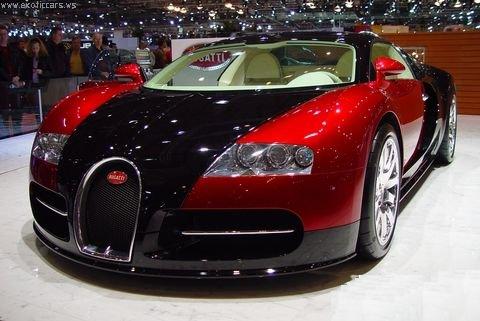
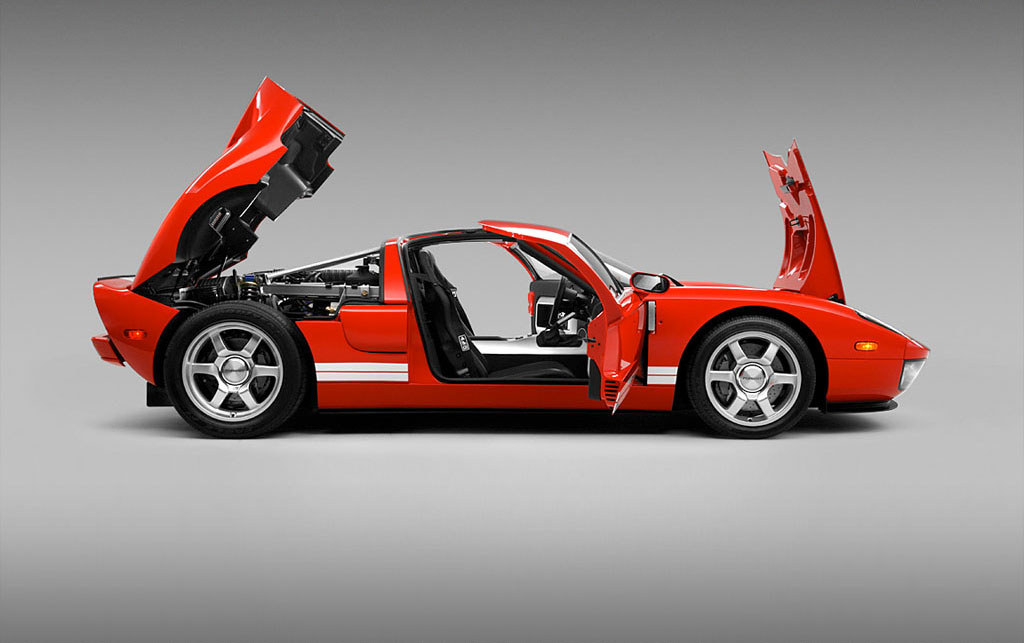
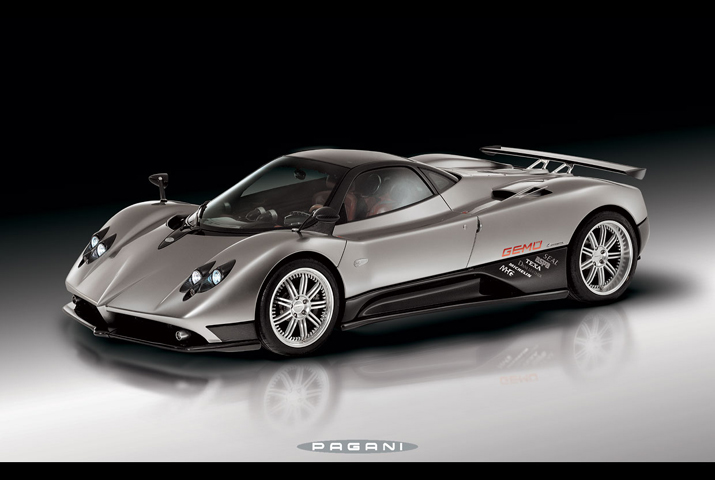
Sports cars are automobiles that have the ability to generate high top speeds. They are generally light weight with a low center of gravity and possess powerful engines to propel them to high speeds. Aesthetics have formed an important aspect of modern sports cars as they are known for their sleek design. Rear-wheel drives are designed for more precise handling, an important need of these vehicles. However, there are other layouts available as well. Race cars are types of sports car but they are not an all inclusive type for example Lamborghini does not build racing cars and solely produces sports car for the consumer.

 Fast CarsThe history of sports car traces its roots to the early 20th century where touring cars were used in early rallys such as the Monte Carlo. The 3 liter 1910 Vauxhall 20 hp (15KW) and 27/80 PS Austro-Daimler, designed by Porsche, can be regarded as the first true sports cars, even though they were not called that. Austin with the 'Seven' and Morris Garages (MG) with the 'Midget' were two of the first companies to offer reliable sports cars.

 Fast CarsSports cars need to have precise handling and different layouts are employed to ensure that. The layout of having a rear-wheel drive with the engine at the front has survived in sports cars. Other layouts such as the RMR layout deployed by manufacturers like Ferrari and Lamborghini have the added advantages of improved handling and better weight distribution. In the RMR layout the motor is located in the center in the chassis behind the driver.

 Fast Cars
 Fast Cars
Fast Cars




 Fast Cars
Monday, January 11, 2010
Spyker Cars N.V. is a Dutch hand-built automobile manufacturer, not related to or controlled by the previous Spyker company that went bankrupt in 1929. The modern Spyker Cars only has the legal right to the brand name. The company's motto is "Nulla tenaci invia est via", which is Latin for "For the tenacious, no road is impassable".

 Spyker Car
 Spyker Car
 Spyker Car
Spyker Car


Spyker Car
Wednesday, March 26, 2008
Exotic cars are the ultimate in tuned cars. These vehicles come straight out of the factory tuned to perfection. While we all can’t afford exotic cars, many car tuning hobbyists create their own. In fact, with the right tuning car parts, know- how and maintenance, you can easily surpass the performance of even the most expensive and rarest vehicles on the road.

 Exotic CarsThe vast majority of exotic cars are also a hot bed of innovative performance engineering. Most car tuners keep track of what many exotic car manufacturers are creating, which is why some of the best tuning car technology trickles down to the aftermarket companies and to car tuning enthusiasts usually in short period of time. Within a year or two or sometimes within a few short months, your stock car can enjoy some of the high performance perks that in the past only the most expensive and rarest vehicles enjoyed.
Exotic Cars


 Exotic Cars
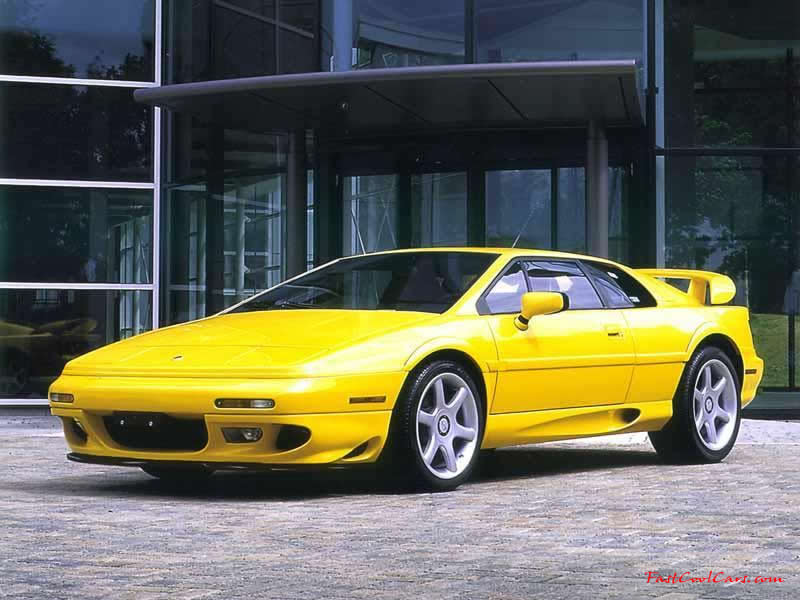
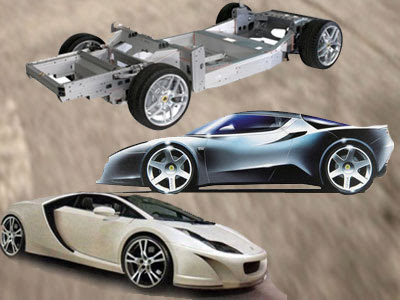
The first Lotus Esprit burst into life in 1976, and with its stunning wedge shaped looks it really stood out from the humdrum Rovers and Fords that were on the road at the time. Colin Chapman was so proud of his new sports car that he arranged to have it parked outside Pinewood studios in the hope that it would be used in the latest James Bond film. The plan worked, and Roger Moore drove a white Lotus Esprit, that could convert into a submarine, in the Spy Who Loved Me.

 Lotus Esprit Car
 Lotus Esprit Car
 Lotus Esprit Car
Once you have settled into the Esprit you will soon find yourself surrounded by switches, buttons and stalks from old Vauxhalls, Peugeot and Citroens. Whilst there is little you can do to modernize the interior, you can replace the standard halogen headlight bulbs with the latest modern xenon bulbs, so you can see the road more clearly when pushing on late at night.


 Lotus Esprit Car
Saturday, March 1, 2008
Alright, so you’ve got the best car and the best accessories money can buy and your car looks great, but what about power, muscle, speed? Like money, you can never have enough power, so it’s time to upgrade your engine’s horsepower. This might sound like an expensive addition, but it doesn’t have to be. There are several ways to amp up the power of your vehicle without spending an arm and a leg. Just check out my suggestions below and you’ll find a wide range of prices that fit your budget.
 Horsepower Car1. Cold air intake. Upgrading with an aftermarket air intake system
is an incredibly easy, cheap and effective way to boost horsepower. It is probably the most common do-it-yourself modification. The kit is simply a bolt on air filter attached to a metal pipe. Once installed, your engine will be receiving cooler air, which is denser than warm air. In effect, there will be a much more powerful combustion when the air is combined with fuel. In general, you can get an aftermarket cold air intake kit in the price range of $100 to $450.
 2. Performance Exhaust. This is another extremely easy and popular way to give your engine more horsepower. Aftermarket exhaust systems are equipped with much larger exhaust pipes which give your engine better output and fuel economy because the flow rate increases with the larger pipe diameter. A compete exhaust system is equipped with a muffler, pips, and exhaust headers and in general should cost between $400 and $1000.
 3. Turbocharger. Turbocharger and supercharger systems compress air and feed it to your engine, resulting in more oxygen dense air to mix with the fuel. This combination increases output and ultimately gives your engine a lot more power. With a turbocharger or supercharger system, you can add up to 100 horsepower from you stock capabilities. In general, turbo and super kits aren’t cheap, they will cost anywhere between $2000 and $10,000.
 It’s easy to get sidetracked with the outward appearance of your car and forget about performance and power. But if you really want to show off and impress your friends, then you’ve got to amp up your engine capabilities. And there really isn’t any better way than by giving your car or truck some more horsepower. If you’re new to modification, then start off small with a new cold air intake system. Once you get used to the new feel then continue with bigger, better upgrades.
Horsepower Caris an incredibly easy, cheap and effective way to boost horsepower. It is probably the most common do-it-yourself modification. The kit is simply a bolt on air filter attached to a metal pipe. Once installed, your engine will be receiving cooler air, which is denser than warm air. In effect, there will be a much more powerful combustion when the air is combined with fuel. In general, you can get an aftermarket cold air intake kit in the price range of $100 to $450.


 Horsepower Car
Saturday, February 2, 2008
Bentley Motors Limited is a British manufacturer of automobiles founded on 18 January 1919 by Walter Owen Bentley (known as W.O. Bentley or just "W.O."). Mr. Bentley had been previously known for his range of rotary aero-engines in World War I, the most famous being the Bentley BR1 as used in later versions of the Sopwith Camel. Since 1998, the company has been owned by the Volkswagen Group of Germany.

 Bentley Car
Before World War I, W.O. Bentley had been in partnership with his brother H.M. Bentley selling French DFP cars, but he had always wanted to design and build his own range of cars bearing his name. In August 1919, Bentley Motors Ltd. was registered, and a chassis with dummy engine was exhibited at the London Motor Show in October of that year. An engine was built and running by December, and orders were taken for deliveries starting in June 1920; however, development took longer than estimated, and the first cars were not ready until September 1921.
It was on a visit to the DFP factory in 1913 that W.O. noticed an aluminium paperweight, and had the inspired idea of using the lightweight metal instead of cast iron to make engine pistons. The first Bentley aluminium pistons went into service in aero engines for the Sopwith Camel, in service during the Great War.

The company was always underfunded, and Bentley turned to millionaire Woolf Barnato for help in 1925. As part of a refinancing deal, which resulted in his effectively owning the company, Barnato became chairman. A great deal of Barnato's fortune was devoted to keeping Bentley afloat, but the Great Depression destroyed demand for the company's expensive products, and it was finally sold to Rolls-Royce in 1931.
Bentley CarIt was on a visit to the DFP factory in 1913 that W.O. noticed an aluminium paperweight, and had the inspired idea of using the lightweight metal instead of cast iron to make engine pistons. The first Bentley aluminium pistons went into service in aero engines for the Sopwith Camel, in service during the Great War.
Bentley Car


 Bentley Car
Subscribe to:
Posts (Atom)

