Showing posts with label classic ferrari. Show all posts
Showing posts with label classic ferrari. Show all posts
Thursday, April 1, 2010
The Ferrari F430 is a sports car produced by the Italian automaker Ferrari from 2004 to 2009, as a successor to the 360. It debuted at the 2004 Paris Motor Show. European left-hand drive sales began in November 2004, but right-hand drive sales did not start until Spring 2005, and the North American market did not get the F430 until Summer 2005. Its replacement, the Ferrari 458 Italia, was unveiled on 28 July 2009 and is expected to go on sale in Spring 2010.

 F430 CarThe MSRP for a Ferrari F430 is $168,005 to $227,000 in the United States, £118,500 in the United Kingdom, approximately €175,000 in the European Union and $389,000 for the base model to $450,000 for the Spider F1 in Australia.

 F430 CarThe F430 features a 4.3L V8 petrol engine derived from a shared Ferrari/Maserati design. This new power plant is a significant departure for the F430 line: the engines of all previous V8 Ferraris were descendants of the Dino racing program of the 1950s. This fifty year development cycle came to an end with the entirely new 4.3L, the architecture of which is expected to replace the Dino-derived V12 in most other Ferrari cars. The engine's output specifications are: 490 PS (360 kW; 483 hp) at 8500 rpm and 465 N·m (343 lb·ft) of torque at 5250 rpm. The F430 has a top speed of 196 mph (315 km/h).
F430 CarF430 CarF430 Car


 F430 Car
Ferrari S.p.A. is a sports car manufacturer based in Maranello, Italy. Founded by Enzo Ferrari in 1929 as Scuderia Ferrari, the company sponsored drivers and manufactured race cars before moving into production of street-legal vehicles in 1947 as Ferrari S.p.A.. Throughout its history, the company has been noted for its continued participation in racing, especially in Formula One, where it has enjoyed great success.

 Ferarri
Several early cars featured bodywork customised by a number of coachbuilders such as Pininfarina, Zagato and Bertone.
 Ferarri
 Ferarri
The company has also produced front-engined 2+2 cars, culminating in the current 612 Scaglietti and California.
 Ferarri


 Ferarri
Friday, March 5, 2010
The high performance super vehicle known as the Ferrari F50 is made by Italian car stalwarts Ferrari. The vehicle was first unveiled in the year 1995 – the fiftieth anniversary of Ferrari.
 F50 carThe Ferrari F50 is a two door, two seat convertible that comes with a removable hard top. It boasts a 4.7 L 60 valve V12 Configuration that is naturally aspirated. This Configuration was developed from the 3.5 L V12 Configuration that had been used in the Ferrari F92 Formula One car of 1992. Only three hundred forty nine units of the Ferrari F50 were issued. The very last Ferrari F50 was produced in the summer of 1997 in Maranello, Italy. The Configuration of the Ferrari F50 was originally used in the Ferrari 333 SP for the American IMSA series in the year 1994.

 F50 carFollowing upon the heels of its motor sports theme, Ferrari developed the Ferrari F50 GT. The Ferrari F50 GT was a prototype that was based on the Ferrari F50. It was meant to compete in GT1 class racing. The Ferrari F50 GT came with a large rear spoiler, fixed roof, and several other adjustments. The car came with a 4.7 L V12 Configuration that was tuned to generate about seven hundred fifty bhp.
 F50 car
F50 car

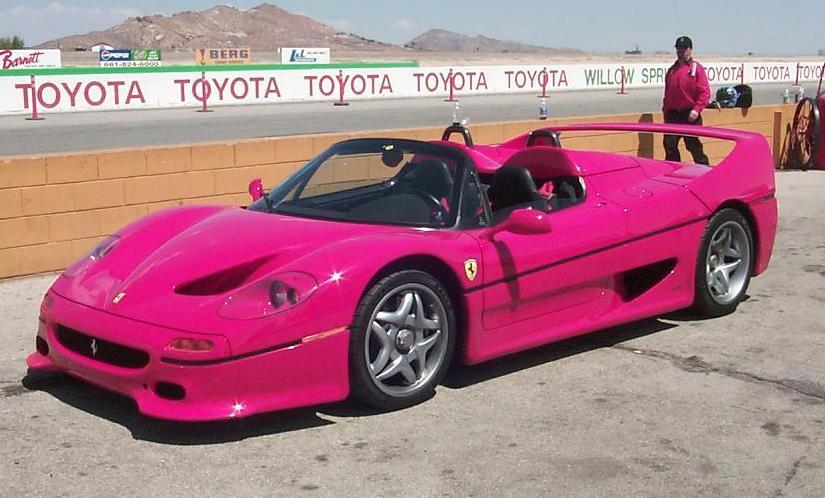 F50 car
F50 car
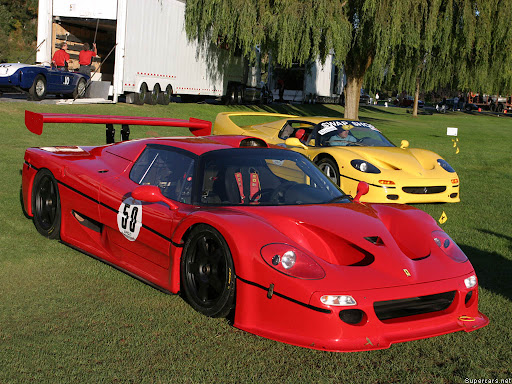

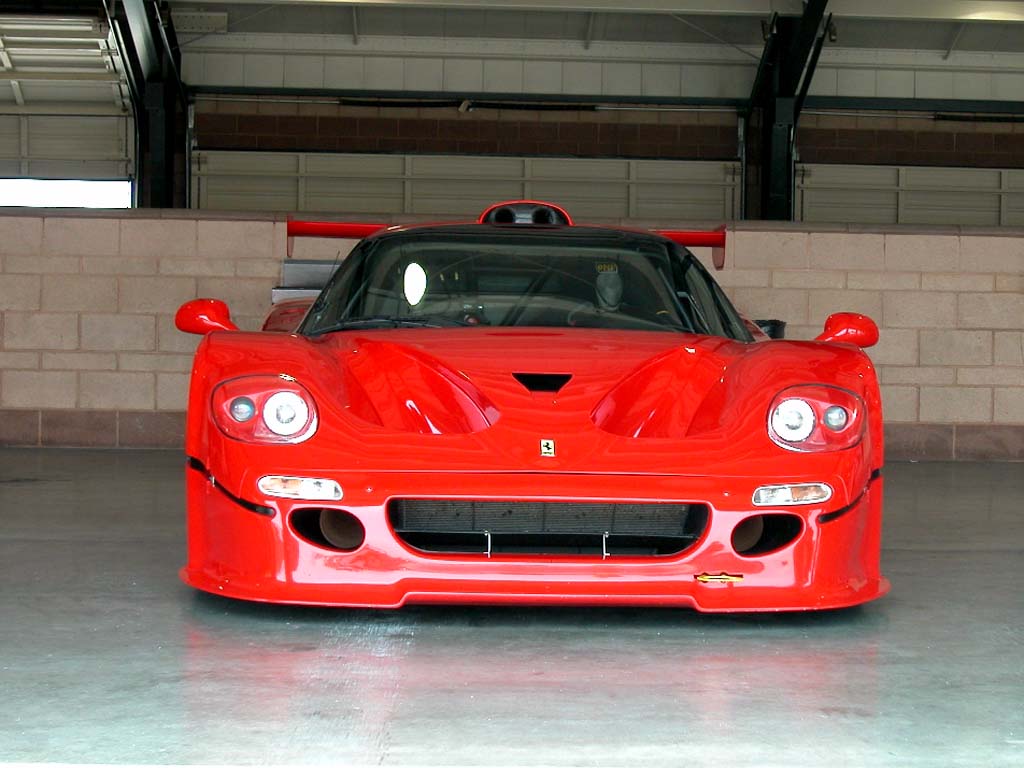


 F50 car
Thursday, November 26, 2009
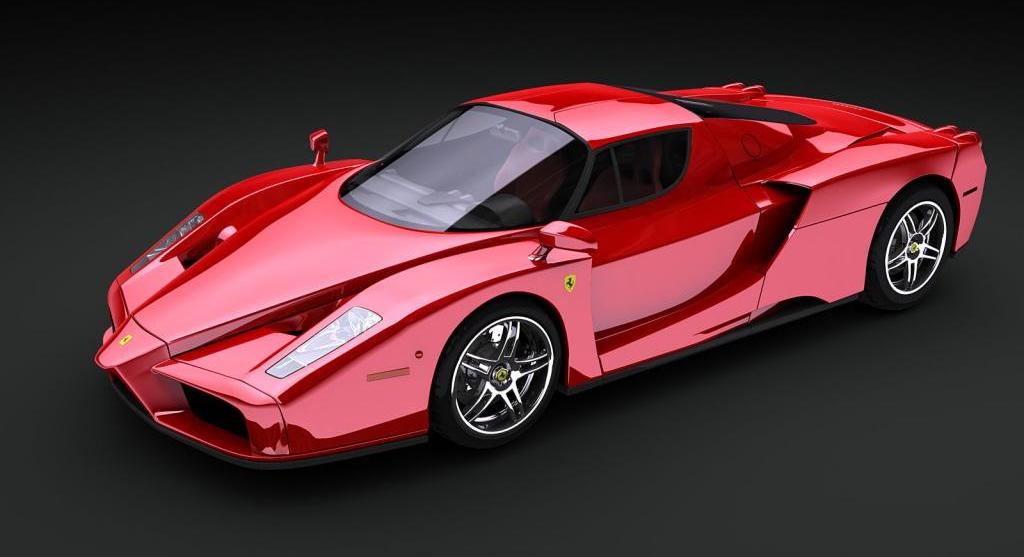
Born in Emilia-Romagna, and raised in Modena, Italy, Enzo Ferrari grew up with little formal education but an irresistible desire to race vehicles. During World War I he was a mule-skinner in the Italian military. His granddad, Alfredo, died in 1916 as a result of a widespread Italian influenza outbreak. Enzo became sick himself and was therefore discharged from Italian service. On coming back home he discovered that the family business had fell down. Having no other job prospects he sought unsuccessfully to find employment at Fiat and at last settled for a job at a smaller car company called CMN redesigning used truck bodies into tiny, passenger autos. He took up racing in 1919 on the CMN team, but had tiny first success.

 Enzo CarHe left CMN in 1920 to work at Alfa Romeo and racing their autos in local races he had more success. In 1923, racing in Ravenna, he purchased the Prancing Horse badge which decorated the fuselage of Francesco Baracca's (Italy's leading ace of WWI ) SPAD fighter, given from his mother, taken from the wreckage of the aeroplane after his puzzling death. This icon would wait till 1932 to be plastered on a racing vehicle. In 1924 he won the Coppa Acerbo at Pescara. His successes in local races encouraged Alfa to offer him a chance of much more celebrated competition and he was praised by Mussolini. Ferrari turned this opportunity down and in a funk he did not race again till 1927 and even then his racing career was often over. He continued to work without delay for Alfa Romeo till 1929 before beginning Scuderia Ferrari as the racing team for Alfa.
 Enzo CarFerrari managed the development of the factory Alfa autos, and built up a gang of over forty drivers, including Giuseppe Campari and Tazio Nuvolari. Ferrari himself continued racing till the birth of his first son in 1932 (Alfredo Ferrari, known as Dino, who died in 1956 ) .

 Enzo Car
 Enzo Car
Enzo Car


 Enzo Car
Wednesday, February 11, 2009
Carrozzeria Scaglietti was an Italian automobile design and coachbuilding active in the 1950s. It was founded by Sergio Scaglietti in 1951 as an automobile repair concern, but was located across the road from Ferrari in Maranello outside Modena, Italy.
 ScagliettiScaglietti gained Enzo Ferrari's trust and respect both through his bodywork and design skills and for providing a retreat for Dino Ferrari as a youth. Scaglietti is credited with the "headrest" bump present on most racing Ferraris of the 1950s and 1960s, a design at first despised by Enzo but championed by Dino. The company's 1958 250 Testa Rossa, with its Formula One-inspired pontoon fenders, is one of the most famous designs of the time.
 ScagliettiIn the 1960s, Scaglietti became the Carrozzeria of choice for Ferrari's racing efforts. This began with the 250 GTO, the design of which Scaglietti took over after Giotto Bizzarrini left Ferrari.
Today, the former Scaglietti works is owned by Ferrari and used to produce the aluminum F430 and 612 Scaglietti cars. A special version of the 456, the 456M GT Scaglietti, bears his name.
 ScagliettiSome famous Ferrari designs by Scaglietti include:
* 1954 375 MM the "Ingrid Bergman car", commissioned by Roberto Rossellini for the actress (also his wife).
* 1957 250 California Spider
* 1958 250 Testa Rossa
* 1962 250 GTO
 Scaglietti
 Scaglietti
Today, the former Scaglietti works is owned by Ferrari and used to produce the aluminum F430 and 612 Scaglietti cars. A special version of the 456, the 456M GT Scaglietti, bears his name.
 Scaglietti
* 1954 375 MM the "Ingrid Bergman car", commissioned by Roberto Rossellini for the actress (also his wife).
* 1957 250 California Spider
* 1958 250 Testa Rossa
* 1962 250 GTO
Scaglietti


 Scaglietti
Subscribe to:
Posts (Atom)

